Everyone belongs in the frame
Camera position and lens coverage are matched to the table, room depth, and remote participants.

Professional AV Systems
A conference room succeeds when people can enter, connect, be seen, be heard, and leave without troubleshooting the system.
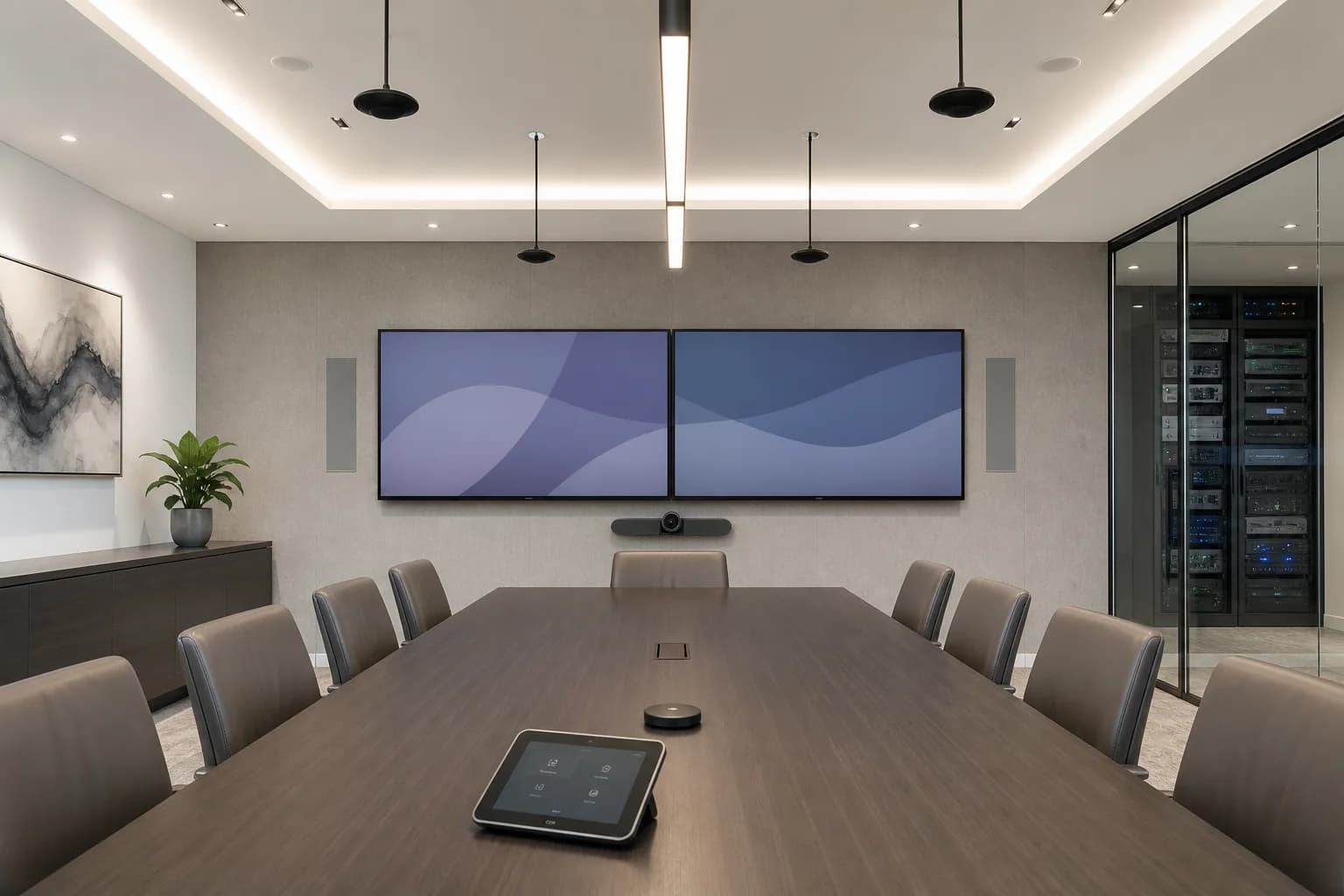
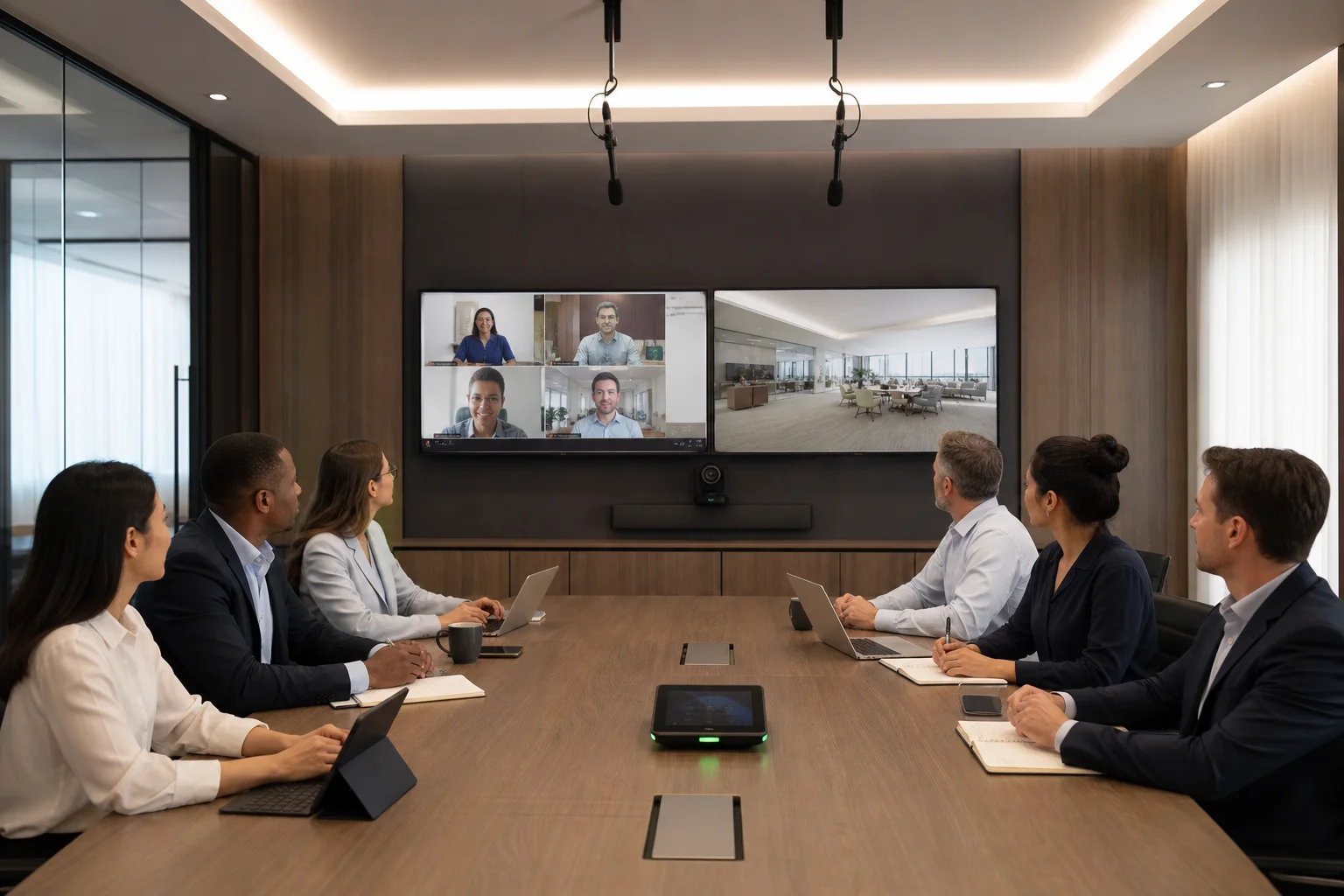
Meeting experience
The room has to make speech intelligible, faces useful, and shared content readable for people on both sides of the call. That requires more than a display and a wide camera.
We coordinate table coverage, microphone zones, loudspeakers, displays, camera height, lighting, platform behavior, guest connections, and recovery controls.
A room fails at the connection between devices, users, and support. Those connections are designed first.
Every device has a place in the signal path, service plan, and user workflow before the room is built.
Installed is not the same as working. We test the system in the states users will actually encounter.
Camera position and lens coverage are matched to the table, room depth, and remote participants.
Microphones, loudspeakers, acoustic conditions, and processing are designed for the room rather than chosen in isolation.
The interface exposes only what the meeting needs, with a documented recovery path when something changes.
Project planning
Yes. Native room systems, bring-your-own-device connections, or a controlled combination can be designed around the organization's standards.
Camera height, lens coverage, seating layout, lighting, and intelligent framing are planned together rather than left to a single wide shot.
Ceiling, table, and integrated microphone options are available. The room acoustics and required speech quality determine the right approach.
We define a documented guest connection path and test the common operating states during commissioning.
Tell us about the space, users, timing, and required result. We will tell you what needs to happen next.
Start a system inquiry ↗